Recognize when your hobby collection becomes a valuable asset. Learn the signs, documentation requirements, and insurance needs serious collectors face.
When Your Hobby Becomes an Asset: The Collector's Turning Point
It started with a single vintage comic book picked up at a garage sale. Then a few more from a local shop. Before long, you're scanning estate sales, joining collector forums, and carefully filing away issue after issue in archival sleeves.
One afternoon, out of curiosity, you pull up a price guide and start adding up the numbers. The total makes you set down your coffee. That collection you've been casually building for years? It's worth more than your car.
That's the moment everything changes. Your hobby just became an asset—and assets need asset management.
Recognizing the Threshold: Signs Your Collection Has Grown Up
Most collectors don't set out to build a valuable portfolio. The accumulation happens gradually, driven by genuine passion rather than financial strategy. But there's a tipping point that, once crossed, demands a new approach.
The Numbers Start Adding Up
The clearest sign is simple math. When your collection's total value exceeds a few thousand dollars, or when individual pieces are worth more than your insurance deductible, you've entered different territory. That vintage Rolex you inherited, the first-edition books lining your shelf, the vinyl records you've curated for decades—they're no longer just "stuff."
The Emotional and Financial Stakes Rise
Ask yourself: If a fire swept through your home tonight, how would you feel about losing this collection? If the answer involves both emotional devastation *and* significant financial loss, you've crossed the threshold. When the pain of loss would be measured in both memories and money, it's time to treat your collection accordingly.
Other Collectors Take Notice
When fellow enthusiasts start asking about specific pieces in your collection, when dealers remember your name, when you find yourself mentally calculating "investment value" alongside personal enjoyment—these are signals. The collector community has recognized what you're building. It's time you did too.
What Changes When Your Collection Becomes an Asset
The shift from casual collector to asset owner isn't about abandoning the joy of collecting. It's about adding a layer of responsibility that protects everything you've built.
A New Mental Framework
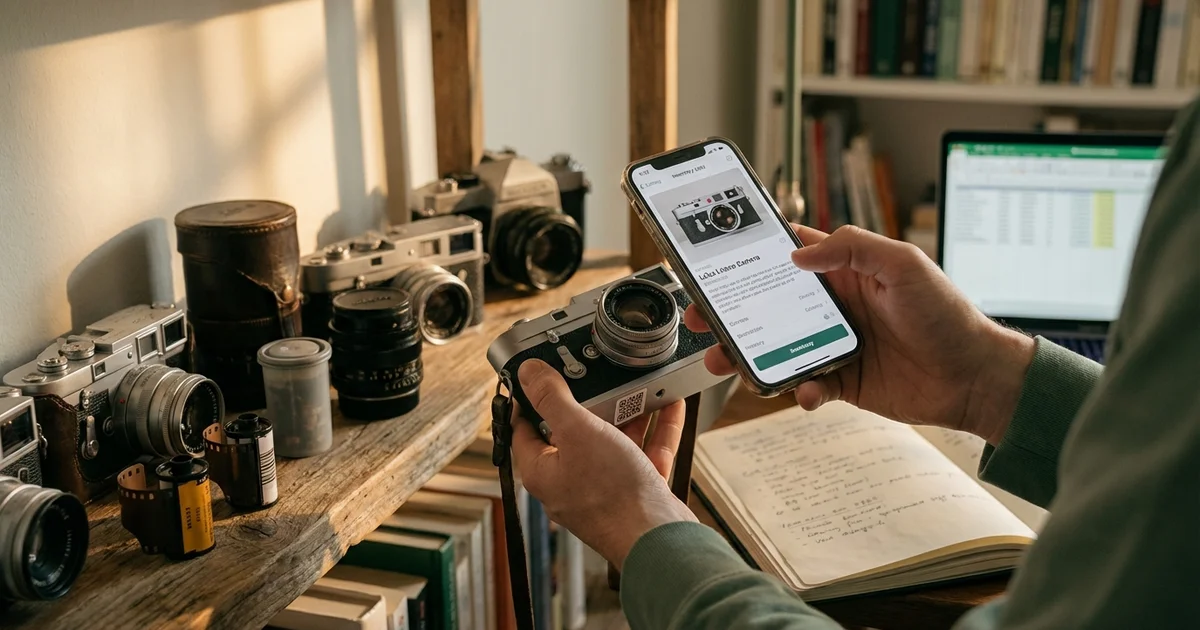
You can still love your vintage camera collection while simultaneously recognizing it as a financial holding. Passion and prudence aren't opposites—they're partners. The collector who carefully documents their treasures isn't less enthusiastic; they're more prepared.
Insurance Becomes Non-Negotiable
Here's a reality check: standard homeowner's and renter's insurance policies typically include sub-limits for collectibles that fall far short of serious collections. That $1,500 cap on jewelry or $2,500 limit on collectibles might have covered your collection five years ago. It won't cover what you have now.
Your options include scheduling valuable items on your existing policy, purchasing a separate collectibles insurance policy, or working with specialized collector's insurance providers. Each option requires one thing in common: documentation.
Storage, Security, and Estate Planning Enter the Picture
Once your collection represents significant value, questions multiply. Is your storage adequate? Should you invest in climate control, better locks, or a safe? What happens to this collection if something happens to you? Do your heirs understand what they'd be inheriting?
These aren't morbid questions. They're responsible ones.
The Documentation Upgrade: From Casual to Comprehensive
There's a stark difference between hobby-level record keeping and asset-level documentation. Making the transition isn't as overwhelming as it might seem—especially with the right tools.
What Casual Collecting Looks Like
Most hobbyist collectors operate with minimal documentation. Maybe some photos on your phone, a rough mental inventory, a shoebox of receipts you've been meaning to organize "someday." This approach works fine when stakes are low.
What Asset-Level Documentation Requires
When your collection has real value, documentation needs to match. Every piece should be photographed and described. Values should be tracked and updated regularly. Provenance—the history of ownership and authenticity—needs to be recorded. Location within your home or storage facility should be noted.
Most importantly, your documentation should be insurance-ready at all times. If you needed to file a claim tomorrow, could you prove what you owned and what it was worth?
Making the Transition Manageable
This is where many collectors get stuck. Looking at years of accumulated pieces and trying to retroactively document everything feels impossible. The key is starting where you are and building systematically.
Squared Away makes this transition practical for collectors at the turning point. The app's AI recognition capabilities work across most collectible categories, helping you catalog items quickly without needing to manually enter every detail. As you photograph each piece, you can add purchase prices, current value estimates, and any provenance information you have.
Think of it as building the catalog you should have been maintaining all along—just compressed into a manageable process. Attach receipts, certificates of authenticity, and appraisal documents directly to each item's record. Note where pieces are stored. Create the comprehensive inventory that protects your investment.
The Ongoing Commitment: Managing Your Collection Long-Term
Documentation isn't a one-time project. Once you've established your catalog, maintaining it requires consistent habits that become second nature with practice.
Document New Acquisitions Immediately
The best time to document a new piece is the moment you acquire it, while you still have the receipt in hand and details fresh in your mind. Before you display that new find or file it away with the rest, take five minutes to photograph it, record the purchase details, and add it to your inventory. The excitement of a new acquisition is exactly when documentation is easiest to skip—and exactly when it matters most.
Schedule Regular Reviews
Values change. Markets shift. That vintage toy collection might be worth significantly more (or less) than it was two years ago. Schedule an annual review of your collection's values, updating estimates based on current market conditions. For high-value pieces, consider professional appraisals every few years.
This is also the time to review your insurance coverage. Does your policy still adequately protect your collection's current value? Have you acquired pieces that should be individually scheduled? A yearly insurance check-in prevents nasty surprises when you need coverage most.
Keep Documentation Secure and Accessible
The documentation that protects your collection needs protection too. Cloud-based solutions ensure that your inventory survives whatever might happen to your physical collection. If your home suffers a disaster, your documentation needs to be somewhere else entirely—backed up, accessible, and complete.
Preparing for Every Possibility
Smart documentation isn't pessimism. It's preparation for the full range of futures your collection might have.
You might sell someday. Comprehensive documentation speeds the process, provides credibility to buyers, and helps you price accurately. You might pass it on to heirs who need to understand what they're inheriting and what it's worth. The collection might be damaged or stolen, requiring proof for insurance claims. And values might appreciate significantly, with your documentation showing the growth over time.
Whatever happens, you'll be ready.
---
Your Collection Has Grown Up
What started as a hobby has become something more substantial—and that's something to celebrate. You've built a collection with real value, piece by careful piece. The same passion that drove you to collect can now drive you to protect what you've built.
Documenting your collection doesn't diminish the joy of collecting. It honors the time, knowledge, and resources you've invested. Every serious collector eventually reaches this turning point. The ones who thrive beyond it are those who respond with documentation their collection deserves.
It's still fun to find that next perfect piece. It's just smart to document it when you do.
Your collection has grown up. Your documentation should too. Start building your comprehensive catalog with Squared Away—because assets worth protecting deserve protection that works.
Download Squared Away and start documenting your collection today
---
**