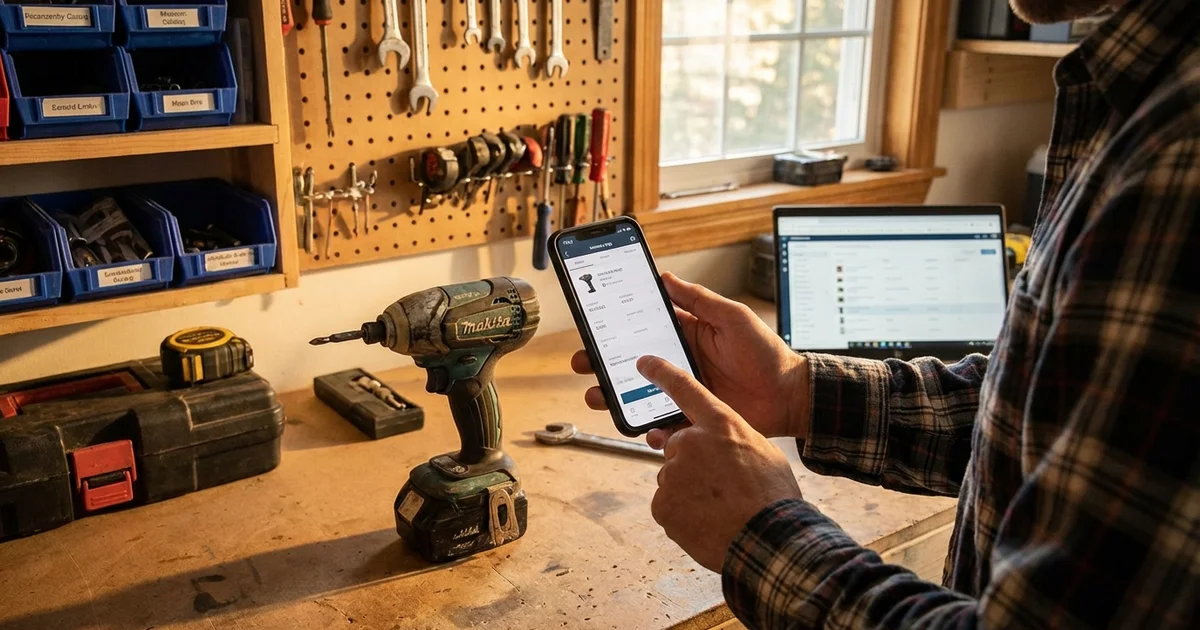
Stop buying replacement tools you already own. Checkout tracking shows who has what equipment, eliminating the costly "where's the impact driver?" problem.
Stop Buying the Same Tools Twice: How Checkout Tracking Solves Your Equipment Accountability Problem
You needed the impact driver yesterday. Walked out to the shop, checked the usual spot on the pegboard, and it wasn't there. Checked the backup location. Nothing.
"Does anyone have the impact driver?" you asked in the group chat.
Silence.
So you did what you've done before — drove to the supply house and bought another one. Two hundred dollars, plus the time lost.
Two weeks later, you found the original impact driver at the bottom of Mike's truck, buried under tarps and extension cords. Mike didn't even remember taking it.
Here's the frustrating part: This has happened before. It'll happen again. Unless something changes.
The Real Problem: Tools Don't Walk Away on Their Own
Let's be clear about what's actually happening when equipment goes "missing." Tools don't grow legs. They don't vanish into thin air. Every single item that's not where it should be is with someone — someone who either forgot they have it, doesn't realize you need it, or can't find it themselves.
It's a Communication Problem, Not a Theft Problem
Most contractors jump to assuming tools are stolen. And sure, theft happens. But the vast majority of "missing" equipment is sitting in someone's truck, left at a job site, or borrowed and never returned. The real issue isn't bad actors — it's the absence of any system for tracking who took what and when.
Without that system, every tool's location becomes a mystery the moment it leaves your shop.
The Hidden Costs Add Up Fast
Think about that impact driver situation. One tool, purchased three times in one year: $600. Now extrapolate that across your entire inventory. How many drill bits, sawzall blades, levels, and specialty tools have you replaced not because they wore out, but because you simply couldn't find them?
Add in the softer costs:
- Time spent searching instead of working
- Job delays when the right tool isn't available
- Team friction and finger-pointing when equipment goes missing
- The general frustration of never knowing what you actually have
For most contractors, we're talking thousands of dollars annually — money that walks out the door simply because nobody knows who has what.
Why "Just Ask Around" Never Works
You've tried the simple solution. Everyone tries it. "Hey team, let's all communicate better about tools." It sounds reasonable. It never works.
People Forget They Have Things
Your crew isn't trying to hide equipment from you. They genuinely forget. Mike grabbed that impact driver three weeks ago for a quick task, tossed it in his truck, and it's been there ever since. He's not thinking about it. Why would he?
Multiple Sites Make Communication Impossible
When you've got crews spread across three job sites, communication gaps aren't a failure — they're inevitable. The guys at the Henderson project have no idea what the team at the Wilson renovation needs. Without a central system, left hand and right hand are permanently disconnected.
Nobody Wants to Admit They Lost Something
Here's human nature: When someone can't find a tool they borrowed, they're not eager to announce that fact. They'll quietly hope it turns up. They'll check their truck a few more times. Meanwhile, you're searching too, or worse, buying a replacement.
You don't need better asking. You need a system that makes asking unnecessary.
How Checkout Tracking Changes Everything
The concept is simple: Every time a tool leaves your shop, someone records who took it, when, and where it's going. When it comes back, they check it in. At any moment, you can see exactly who has what.
The Behavior Shift
Without checkout tracking:
- Grab tool from shop, leave
- Tool location: Unknown
- Someone else needs it: Can't find it, can't ask anyone specific
- Eventually: Tool shows up somewhere, or it doesn't
With checkout tracking:
- Grab tool, check out on your phone (five seconds)
- Tool location: Recorded as "With Mike at Johnson site"
- Someone else needs it: "Hey Mike, can you bring the impact driver to Wilson when you're done?"
- Accountability: Mike knows others can see he has it
The magic isn't surveillance — it's information. When everyone can see who has what, behavior changes naturally. People remember to return things. They communicate when they're done with equipment. The mystery disappears.
It's About Clarity, Not Distrust
Some contractors worry that implementing checkout tracking sends a message of distrust to their team. In practice, the opposite happens. Your crew gets tired of being accused of losing things, tired of searching for equipment, tired of the frustration. A clear system protects them as much as it protects you.
When someone asks "Who had the rotary hammer last?" the answer is clear. No assumptions, no accusations — just information.
Implementing Tool Checkout with Squared Away
Setting up an effective checkout system doesn't require clipboards, spreadsheets, or complicated software. Squared Away makes the process simple enough that your crew will actually use it.
Setting Up Your Equipment Library
Start by creating locations for each area where tools live — your main shop, each truck, active job sites. Then add your tools with photos and details. Having clear images eliminates the "which impact driver?" confusion when you've got multiple similar items.
Include replacement values for each piece of equipment. This serves double duty: You'll have documentation if something is genuinely stolen, and you'll start seeing the real value of what's floating around in the field.
The Checkout Process (Five Seconds, Seriously)
When someone grabs a tool, they pull up Squared Away on their phone, find the item, and tap "Check Out." They assign it to themselves and note where they're taking it. The tool's status immediately updates: "Checked Out - Mike - Johnson job."
The key is keeping this friction-free. If checkout takes more than a few seconds, people won't do it. With Squared Away, it's faster than sending a text.
Finding What You Need
Here's where the time savings kick in. Someone needs the impact driver? Check the app. Answer appears in seconds: Mike has it at the Johnson site. Call or text Mike directly instead of sending a group message and waiting.
Need to see all equipment currently in the field? Filter by "Checked Out" items and you've got a complete picture. Expecting something back that hasn't shown up? Send a reminder through the app.
Getting Your Team On Board
Adoption requires consistency. A few tips:
- Show the value for them: "No more getting blamed for missing tools, no more searching for equipment someone else has"
- Make it non-negotiable: Everyone uses it, every time
- Lead by example: If the boss checks out tools, the crew will too
- Keep it simple: Don't over-complicate with excessive categories or required fields
Beyond Checkout: Additional Accountability Benefits
Once you're tracking tool locations, you'll discover additional benefits you didn't expect.
Maintenance scheduling becomes possible when you can see how often equipment is used. That concrete saw that's checked out every week probably needs more frequent service than the one that goes out monthly.
Job planning improves when you know what's actually available before scheduling. No more showing up to find the equipment you needed is three job sites away.
Insurance documentation exists automatically. If something is genuinely stolen, you have records of when it was last seen and where.
Professional operations signal to clients that you run a tight ship. They notice when your crew knows exactly where everything is.
The Five-Second Habit That Saves Thousands
Tools don't walk away — someone has them. The question is whether you have a system that tells you who.
Checkout tracking isn't about micromanaging your crew or assuming the worst about people. It's about having information when you need it. The five seconds it takes to check out a tool saves hours of searching and hundreds of dollars in unnecessary replacement purchases.
More importantly, it eliminates the frustration, the accusations, and the mystery that comes with running a team that shares equipment.
---
Know who has your equipment. Squared Away's checkout tracking creates the accountability your team needs — without the hassle of spreadsheets or the awkwardness of constant asking. Set up takes minutes, and the system pays for itself the first time you *don't* buy a replacement tool.
Get started with Squared Away today →
---